
Plantar Fasciitis Treatment in Grand Rapids MI
Mornings should not start with heel pain
That stabbing pain with your first steps of the day is an inflamed plantar fascia. It responds well to care, and we treat it gently.
The plantar fascia is the band of tissue that connects your heel bone (the calcaneus) to your toes. When it becomes inflamed, it can cause a lot of pain. Plantar fasciitis is most prevalent in runners, people carrying extra weight, pregnant women, and anyone who wears unsupportive shoes. Other contributing factors include long hours of standing, vitamin C deficiency, and a sudden jump in activity level.
Understanding plantar fasciitis
The likelihood of developing this condition rises between the ages of 40 and 70. The classic symptom is stabbing heel pain that is worst first thing in the morning, with the first few steps of the day, and often eases with continued walking. It is uncommon to experience plantar fasciitis in both feet at the same time. Left untreated, it can lead to a heel spur.
How we diagnose it
A proper diagnosis starts with an exam. We test your foot's reflexes, muscle strength and tone, coordination, and balance, and we perform a structural evaluation of the knees, hips, and pelvis. Poor weight distribution or an improper gait may be what set off the plantar fasciitis in the first place. To rule out other causes such as a heel spur, a fracture, or a subluxation, an X-ray may be taken.
Treatment options
Plantar fasciitis responds well to soft tissue work. The goal is to restore full range of motion in the joints of the ankle and foot while minimizing stress on the plantar fascia, and we commonly work the calf muscles to improve flexibility as well. The foot is also one of the extremities Dr. McAllister adjusts directly. As an Advanced Certified Activator Methods chiropractor, he can make precise, low-force corrections to the small joints of the foot and ankle, restoring motion without forcing an already irritated structure.
What you can do at home
While you are at home, we recommend stretching your plantar fascia to ease pain and support healing. Ice massage over the painful area is a great medication-free way to calm it down: three to four times a day, no more than 20 minutes at a time, taking care not to freeze the skin. If it feels too cold, it probably is.
To help prevent plantar fasciitis from developing or returning, invest in proper orthotics for arch support and maintain a healthy weight. And because altered gait sends stress up the leg, untreated foot pain often shows up later as knee pain. Treating the foot protects the joints above it.
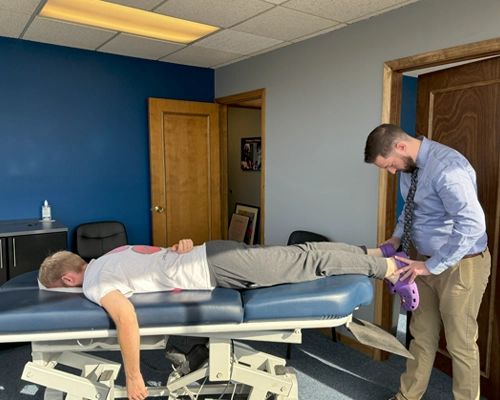
Precise care for the joints that carry you
Most people do not expect a chiropractor to treat feet. Here it is routine. The Activator instrument delivers exact, comfortable corrections to the foot and ankle, and Dr. McAllister pairs that with soft tissue work and a gait evaluation so the fix holds.
How our gentle technique worksDreading those first steps every morning?
If you need help preventing or treating plantar fasciitis, give our team a call. We will examine your foot and gait and build a plan that works.