Neuropathy Signs and Symptoms in Grand Rapids MI
Listen to what your nerves are saying
Tingling, burning, and numbness in the hands and feet are your nervous system asking for attention. Catching neuropathy early makes it far easier to manage.
Neuropathy is also known as peripheral neuropathy because of its effect on the body's sensory and motor nerves. Patients very commonly notice the first symptoms in their extremities: the hands, arms, legs, and feet. When it presents this way, it is referred to as sensorimotor polyneuropathy.
Common signs and symptoms
- Tingling in the extremities. Often described as a pins-and-needles or prickling feeling.
- Burning pain in the lower limbs. As the condition progresses, the burning can move into the arms and hands.
- Sharp, stabbing pains. Generally worse in the evening. Like the burning sensation, this electric-like pain tends to begin in the feet and legs and move into the hands and arms as the condition progresses.
It is also common for patients to develop muscle weakness and coordination problems, and in advanced cases the muscles of the limbs can become paralyzed. Patients face an increased likelihood of foot ulcers and skin infections. Nerve damage can also develop into dysesthesia, a distortion of the sense of touch that often produces tingling or burning. Eventually the skin on the extremities can become so sensitive that even the light pressure of bed sheets or a towel is painful.
Autonomic neuropathy
Autonomic neuropathy happens when the condition affects the automatic nerves, the ones controlling functions such as breathing, perspiration, and heart rate. When this occurs, a patient may experience:
- Low blood pressure, leading to dizziness when rising from a seated or lying position
- Accelerated heartbeat
- Nausea and vomiting
- Difficulty swallowing
- Balance and coordination problems
- Digestive issues and diarrhea
- Inability to empty the bladder completely
- Bowel and bladder incontinence
Mononeuropathy
Patients may also experience trouble in a single nerve, which is known as mononeuropathy. It can bring on:
- Problems with the eyes, including difficulty focusing, double vision, and eye pain
- Pain in specific areas such as the shin, chest, or foot
- Bell's palsy, a disorder of the facial nerves that causes one side of the face to weaken or become paralyzed
- Carpal tunnel syndrome, which causes prickling, burning, tingling, pain, and numbness in the hand and wrist
When to get evaluated
See a doctor if you are experiencing any abnormal pain, numbness, tingling, or weakness in your arms, legs, wrists, ankles, hands, or feet. Diagnosed early, a condition like this can be controlled, and further damage can potentially be prevented. An evaluation is also recommended if your symptoms disturb your sleep or mood, or if a small cut on an extremity does not appear to be healing normally.
Our team at Kentwood Family Chiropractic is here to help. Dr. McAllister evaluates how your spine and nervous system are functioning and, as an Advanced Certified Activator Methods chiropractor, uses gentle, precise, low-force care suited to patients whose nerves are already irritated. Because neuropathy symptoms overlap with other radiating problems, we also screen for the patterns described on our arm and leg pain page.
A careful exam before any conclusions
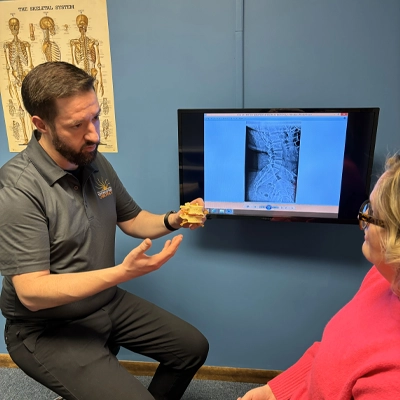
Nerve symptoms deserve a methodical workup, not guesswork. Dr. McAllister takes a thorough history, examines how your nerves and joints are functioning, and uses on-site X-rays when needed, then explains what we find in plain language along with your options, in our office or beyond.
Schedule an evaluationNumbness and tingling are worth a phone call
The earlier neuropathy is identified, the more can be done about it. Call us and let us take a careful look.